
Speed Matters: How to Optimize Your Website for Lightning-Fast Page Load Times

The importance of website page speed cannot be overstated. Users expect websites to load quickly and smoothly. A slow loading website can lead to frustrated users, increased bounce rates, and lower search engine rankings. Research has shown that even a one-second delay in page load time can result in a significant decrease in conversions and user engagement. Therefore, it’s crucial to optimize your website’s page speed to ensure that it loads quickly and efficiently. The good news is that recent advances in web technology have made it much easier to build clean and fast websites. By investing time and effort into optimizing your website’s page speed, you can improve user experience, increase engagement and conversions, and ultimately achieve greater success online.

Minimize and Optimize Code

Writing more efficient code can improve page load speed by reducing the size of files that need to be downloaded by the user’s browser. This might involve minifying your HTML, CSS, and JavaScript files, removing unnecessary white space and comments, and using CSS instead of images wherever possible. One of the key principles of writing efficient code is to keep it simple and concise. Avoid using unnecessary code or scripts that can slow down your website. Make sure to test your code thoroughly to identify any performance bottlenecks or errors, and make the necessary optimizations to ensure that your website is running at its best. By writing efficient code, you can ensure that your website is delivering the best possible user experience to your visitors.

Optimize Images
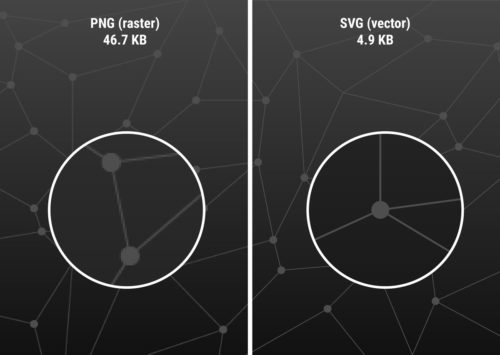
PNG vs SVG
PNG vs SVG file sizes

Images are often one of the biggest contributors to slow page speed. To optimize images, reduce their file size without sacrificing quality. You can do this by compressing images, reducing their dimensions, and using an efficient image file format. Use tools like Photoshop or online image editors to find the right balance of compression and image quality.

WebP is a modern image format (now supported by every major browser) designed specifically for the web and offers superior compression compared to JPEG and PNG. WebP supports both lossy and lossless compression, as well as transparency, making it a versatile option for web developers looking to optimize page speed without sacrificing image quality. Even better yet, certain types of graphics can be displayed in SVG format. SVG is a vector format (as opposed to raster) with unlimited resolution, razor sharp edges, and extremely small file size.

Minimize HTTP Requests

HTTP requests are made when a browser requests a resource from your server, such as an image or script. Minimizing the number of HTTP requests can significantly improve page speed. You can do this by reducing the number of resources on a page, combining multiple scripts and stylesheets into one file (less critical on modern HTTP/2 and HTTP/3 servers), merging images into a sprite, or using browser caching to store static resources locally.

Use a Content Delivery Network (CDN)

A Content Delivery Network (CDN) is a network of servers that are distributed around the world to deliver content to users more quickly. By using a CDN, your website’s static resources (such as images, scripts, and stylesheets) are cached on multiple servers around the world. This reduces the distance between your server and the user, resulting in faster load times.

High Performance Web Hosting

Your website’s hosting provider can also make a huge impact on page speed. Choose a web host that offers fast and reliable hosting, with servers located close to your target audience. Consider upgrading to a Virtual Private Server (VPS) or a dedicated server if you’re experiencing slow page speed on shared hosting.

Optimizing your website’s page speed is essential for improving user experience, reducing bounce rates, and increasing search engine rankings. Use the strategies outlined above to ensure that your website is lightning fast and worth visiting. Remember that page speed is a critical factor in the success of your website, and investing time and effort in optimizing it will pay off in the long run.
Why should I hire a web designer instead of just doing it myself?

In this connected and competitive world, having a website is essential for any business or organization that wants to establish an online presence. While there are plenty of DIY website builders and templates available, there are many advantages to hiring a professional web developer to create your website. So, what are the benefits of hiring a professional website designer instead of doing it yourself?

Professionalism and Quality

One of the main advantages of hiring a web designer is that you can be sure that you are getting a professional and high-quality website. A professional web designer has the expertise, skills, and experience to create a website that is visually appealing, functional, and user-friendly. They can ensure that your website is optimized for search engines, loads quickly, and works across all devices and browsers. Their experience should help to create a strong user experience and ensure that your website doesn’t annoy and turn away users. Or even build more advanced features like animation, interactive WebGL experiences, or other new web technologies. This level of professionalism and quality can be difficult to achieve with a do-it-yourself website builder or template.

Customization and Flexibility

Another advantage of hiring a web designer is that you can customize and tailor your website to your specific needs and goals. A professional web designer can work with you to understand your brand identity, target audience, and business objectives, and then create wireframes and mockups to help you visualize the possibilities. They can then create a custom website that meets your unique requirements and showcases your products, services, or content. This level of customization and flexibility can be challenging to achieve with a DIY website builder or template.

Time and Efficiency

It will be love at first site

Creating a website can be a time-consuming and complex process, especially if you are new to web design. By hiring a web designer, you can save time and focus on other aspects of your business or organization. A professional web designer can work efficiently to create your website, ensuring that it is completed within your desired timeframe. They can also provide ongoing support and maintenance, ensuring that your website stays up-to-date and secure.

Support and Expertise

A professional web designer can also provide ongoing support and expertise, helping you to make the most of your website. They can provide advice on web design trends, search engine optimization, and user experience best practices. They can also troubleshoot any technical issues that arise, ensuring that your website runs smoothly and efficiently. Think of a website as a living and breathing organism. Without constant updates and maintenance, a website can become insecure, stale, or stop working altogether. With a DIY website builder or template, you may not have access to this level of support and expertise.

Return on Investment

Finally, hiring a web designer can provide a strong return on investment for your business or organization. A professional and affordable website can help to establish credibility and trust with your audience, leading to increased traffic, engagement, and sales. It can also help you stand out from your competitors and establish a strong brand identity. While there is a cost associated with hiring a web designer, the ROI can be significant, making it a worthwhile investment for many businesses and organizations.

While DIY website builders and templates can be a tempting option, there are many advantages to hiring a professional web designer. By choosing someone with experience, you can ensure that your homepage is professional, customized, efficient, and future-proof. Ultimately, hiring a web designer can provide a strong ROI and help your business or organization succeed in today’s digital age.

A custom website can be more affordable than you think. Get a quote today!