Event Horizon: A Plain-English GA4 Guide to Google Analytics 4

Your website is talking. Every click, scroll, form submission, and “nope, wrong page” exit is a little signal about what people want from you. Google Analytics 4 is how you listen. The trouble is that the first time you open it, it can feel less like listening and more like being handed the cockpit manual for a jet you didn’t know you owned.

This GA4 guide is the plain-English version. No hype, no “ten secret reports,” just the handful of concepts that make everything else click. Once you understand how Google Analytics 4 thinks, the menus stop being scary and start being useful. (If you’ve read our older post on gaining insight into your website traffic, consider this the modern, deeper sequel.)

Think of Your Website as a Restaurant

Here’s the analogy we’ll lean on for the rest of this post. Picture your website as a restaurant, and Google Analytics as the very attentive host with a notepad.

  • Users are the guests who walk through the door.
  • Sessions are individual visits. The same guest can come in for lunch on Tuesday and dinner on Friday: one user, two sessions.
  • Events are everything that happens at the table: sitting down, opening the menu, ordering an appetizer, asking for the check.
  • Key events are the moments that actually pay the rent, like ordering the chef’s tasting menu or booking the back room for a party.
  • Acquisition channels are how the guests heard about you: a food blog, a friend, a sign out front, or just walking by.

Keep that picture in mind. Almost every confusing GA4 screen is just the host’s notepad, sorted a different way.

How Google Analytics 4 Thinks: Everything Is an Event

The single biggest idea in GA4 is the event-based data model. Older analytics tools were built around pageviews and sessions, with other interactions bolted on. GA4 flips that around: everything is an event. A page loading is an event (page_view). A visit starting is an event (session_start). Someone scrolling far down the page, clicking a link to another site, or downloading a PDF are all events too.

Each event can carry parameters, which are extra details that describe it, such as which page was viewed or which file was downloaded. Think of the event as “ordered a drink” and the parameters as “iced tea, no lemon, table six.”

You don’t have to code most of this yourself. GA4 collects a set of events automatically, and a feature called enhanced measurement can track common interactions like scrolls, outbound clicks, site search, and file downloads with a simple toggle in your web data stream settings. Custom events are there for everything else.

Accounts, Properties, and Data Streams

GA4 organizes things in three layers:

  • Account: the top-level container, usually one per business.
  • Property: where your reports live and your settings are configured. Most small businesses need one property per brand or website.
  • Data stream: a source of data flowing into the property, such as your website (a web stream) or an iOS or Android app. Each web stream has a Measurement ID that starts with G-, which is what you or your developer paste into your site’s tag or plugin settings.

In restaurant terms: the account is the company, the property is the restaurant, and the data streams are the dining room and the takeout window, both reporting to the same host.

Key Events: Decide What Success Looks Like

Not every event matters equally. A key event is any event you mark as especially important to your business, like a contact form submission, a quote request, a purchase, or a newsletter signup. Any event you collect can be marked as a key event, and once it is, GA4 shows you which channels, pages, and campaigns lead people to do it.

You may still see the word “conversion” around GA4, and that’s not a typo. Google now uses key events for the important actions you analyze in Analytics, and reserves conversions for key events you use to measure and optimize Google Ads campaigns. If you don’t run ads, key events are the ones you care about. Either way, they’re the backbone of designing a website for higher conversion rates, because you can’t improve what you never defined.

If your site records a form submission with a custom event, it might look something like this:

Snippet: a custom event with gtag.js

// Fire after a quote form submits successfully
gtag('event', 'generate_lead', {
  form_name: 'quote_request',
  page_location: window.location.href
});

generate_lead is one of Google’s recommended event names, which means GA4 already understands what it represents. Once that event shows up in your property, mark it as a key event in Admin and it’ll start appearing in your key event metrics. Pro tip: fire it on the success state, not the button click, or you’ll count every frustrated person who hit “Submit” with an empty email field.

Users, Sessions, and Engagement Rate vs. Bounce Rate

GA4 counts users (the guests) and sessions (the visits), but the metric that tells you the most about quality is engagement.

An engaged session is a visit that meets at least one of these conditions:

  • It lasts longer than 10 seconds.
  • It includes a key event.
  • It includes two or more page or screen views.

Engagement rate is the percentage of sessions that were engaged. Bounce rate is simply the opposite: the percentage of sessions that were not engaged. So if your engagement rate is 62%, your bounce rate is 38%. Same coin, two sides.

That’s a much fairer definition than the old “left after one page” bounce. A visitor who lands on your blog post, reads the whole thing for four minutes, and leaves satisfied is engaged, not bounced. In restaurant terms: someone who orders, eats, and tips well didn’t “bounce” just because they didn’t also visit the bar.

One quirk: engagement rate and bounce rate aren’t shown in most default reports. You can add them by customizing a detail report (such as Pages and screens) if you have Editor or Administrator access, or pull them into an Exploration.

Where Your Visitors Come From: Channels and UTM Tags

GA4’s acquisition reports sort traffic into default channel groups like Organic Search, Direct, Referral, Organic Social, Email, and Paid Search. Each visit also gets a source (where it came from, like google or newsletter) and a medium (what kind of traffic it is, like organic or email).

You’ll see two flavors of acquisition report. User acquisition tells you how people found you for the very first time. Traffic acquisition tells you where each session came from, including returning visitors. Both are useful; they just answer different questions.

GA4 is pretty good at guessing, but for links you control, like emails, social posts, QR codes on a flyer, or a partner’s website, don’t make it guess. Add UTM parameters to the URL so the visit is labeled exactly the way you want:

Snippet: a UTM-tagged URL

https://example.com/spring-menu/?utm_source=newsletter&utm_medium=email&utm_campaign=spring_menu

The three you’ll use most are utm_source, utm_medium, and utm_campaign. Pick a naming convention (lowercase, underscores, no spaces) and stick to it, because GA4 treats Email and email as two different things. Use UTMs only on links pointing to your site from elsewhere; tagging your own internal links will overwrite the real source of the visit. Clean, readable URLs help here too, so it’s worth knowing the basics of building SEO-friendly URLs.

Reports vs. Explorations

GA4 gives you two main ways to look at data.

Reports are the ready-made dashboards: acquisition, engagement, pages and screens, events, and so on. They’re fast, easy to share, and perfect for regular check-ins. Think of them as the restaurant’s nightly summary: covers served, top dishes, busiest hour.

Explorations (found in the Explore section) are your workshop. You drag in dimensions and metrics, build free-form tables, funnels, and path analyses, and answer questions the standard reports don’t cover, like “What did people who requested a quote look at before they did it?” Explorations are where analysis happens; reports are where monitoring happens.

One thing to know up front: Explorations are limited by your property’s data retention setting, which controls how long user-level and event-level data is kept. Standard reports aren’t affected, but if you want to explore further back, check that setting in Admin early and set it to the longest option available to you. It isn’t retroactive.

Explorations are also a natural partner to experiments. If you’re running A/B testing for data-driven improvements, GA4 is where you check whether the winning variation actually produced more key events, not just more clicks.

Connect Search Console for the Other Half of SEO

GA4 tells you what visitors do after they arrive. Google Search Console tells you what happened before: which search queries showed your pages, how often you appeared, and how often people clicked. Linking the two in GA4’s Admin area (under product links) lets you see Search Console data inside Analytics, so you can connect a search query to the landing page and the engagement that followed.

If you haven’t set up Search Console yet, start with our guide on how to use Google Search Console. Pair the two and you’ll know which keyword research bets are paying off and which pages rank well but fail to hold attention once people land.

Consent and Privacy Basics

Analytics runs on visitor data, so privacy isn’t optional. Depending on where your visitors live, you may need to ask for consent before setting analytics cookies. GA4 supports consent mode, which lets your consent banner tell Google tags whether a visitor has agreed to analytics and advertising storage, and adjusts how tags behave based on that choice.

A few evergreen basics:

  • Use a consent banner or consent management platform that actually integrates with consent mode, rather than one that just looks the part.
  • Never send personally identifiable information, like names, email addresses, or phone numbers, to GA4 in event parameters or URLs. Google’s policies prohibit it.
  • Mention analytics in your privacy policy, in plain language.
  • Expect some gaps. When visitors decline cookies, your numbers will be lower than reality. That’s the cost of respecting people, and it’s worth it.

This isn’t legal advice, and the rules vary by region. If your business handles a lot of personal data, it’s worth a conversation with someone who does this for a living.

Filter Out Yourself (and Your Team)

If you check your own site twenty times a day, congratulations: you’re your own biggest fan, and you’re also skewing your data. GA4 lets you define internal traffic by IP address in your web data stream’s tag settings, then exclude it with a data filter in Admin.

Data filters have three states: Testing, Active, and Inactive. Start in Testing, which labels matching traffic without removing it, and confirm in an Exploration that the right visits are being caught. Only then switch it to Active. That step matters, because an active exclude filter is permanent: the data it removes is never processed and can’t be recovered.

Internal traffic is the friendly kind of noise. The unfriendly kind is bots, and that’s a whole topic of its own. If you’ve ever seen a mysterious spike of zero-second visits from a city you’ve never done business in, read how to spot and filter bot traffic in GA4.

Use Annotations to Remember Why Things Changed

Six months from now, you will look at a traffic jump and have absolutely no idea what caused it. Annotations fix that. In reports with line graphs, you can add a short note tied to a date or date range, like “Launched new homepage,” “Started email campaign,” or “Fixed broken contact form.” Annotations appear across all line-graph reports, so everyone with access gets the context.

Make it a habit: anytime you redesign a page, improve page load times, or launch a campaign, drop an annotation. Your future self will be grateful, and slightly smug.

Common GA4 Pitfalls to Avoid

  • Installing the tag twice. A theme setting and a plugin and Google Tag Manager all adding GA4 means double-counted pageviews and suspiciously perfect engagement. Pick one method.
  • Never marking key events. Without them, you have traffic data but no idea whether that traffic does anything.
  • Treating every metric as a goal. More sessions isn’t automatically better. A hundred engaged visitors who request quotes beat a thousand who leave in three seconds.
  • Messy UTM naming. Facebook, facebook, and fb become three separate sources. Write your conventions down.
  • Leaving data retention at the default. If you’ll want year-over-year Explorations, change it now. It doesn’t apply backward.
  • Activating filters without testing. Permanent means permanent.
  • Checking numbers too soon. Standard reports can take some time to process, so use the Realtime report for “is my tag working?” and the standard reports for actual decisions.
  • Expecting perfect accuracy. Ad blockers, declined consent, and privacy features mean GA4 is a strong directional signal, not a census. Look at trends, not single digits.

How to Use Google Analytics 4 Without Drowning in It

If you remember nothing else from this GA4 guide, remember this: decide what success means (key events), label where people come from (channels and UTMs), keep your data clean (internal traffic and bot filtering), and write down what you changed (annotations). Then check in regularly, ask one question at a time, and let Explorations do the heavy lifting when the standard reports run out of answers.

Your restaurant’s host is taking great notes. You just have to read the notepad.

And if you’re planning a new website, it’s much easier to build measurement in from day one than to retrofit it later. When we build a site, key events, clean tracking, and fast pages are part of the blueprint, not an afterthought. Request a quote for your new website and let’s build something worth measuring.


A/B Testing for Data-Driven Improvements in Web Design

In the fast-paced world of web design, staying ahead of the competition and delivering an exceptional user experience is crucial. This is where A/B testing comes into play. A/B testing, also known as split testing, is a methodical approach to website optimization that allows designers and developers to make data-driven decisions. By comparing two or more versions of a webpage, A/B testing provides valuable insight into which design elements, content variations, or functionalities resonate best with users. It’s like a digital experiment that helps uncover what truly works and what doesn’t.

The concept of A/B testing is simple yet powerful. You take your existing webpage (the control or variant A) and create a modified version (variant B) with specific changes you want to test. These changes could be anything from the color of a call-to-action button to the layout of a product page or the wording of a headline. By randomly splitting your website’s traffic between variant A and variant B, you can collect quantitative data and analyze user behavior to determine which variant performs better.

A/B testing allows you to make informed decisions based on evidence rather than assumptions or guesswork. Understanding how users interact with different elements of your website shows you how you can optimize for higher conversion rates, increased engagement, and improved user satisfaction. A/B testing also provides insight into user preferences, helping you align your design choices with their expectations. Ultimately, the goal is to create a website that not only looks visually appealing but also performs at its best, delivering a seamless user experience that keeps visitors coming back for more.

What is A/B Testing?

A/B testing is a methodology used in website optimization to compare two or more variations of a webpage and determine which one performs better in achieving specific goals. It is a data-driven approach that enables designers and developers to make informed decisions and continuously improve the effectiveness of their websites.

The purpose of split testing is to measure the impact of changes made to a webpage and understand how those changes influence user behavior. By systematically comparing different variants, you can identify the elements that have the greatest impact on user engagement, conversion rates, click-through rates, or any other key performance indicators that align with your business objectives.

How Do I Begin A/B Testing?

Higher conversion rates

The A/B testing process typically involves several key steps. First, you start by formulating a hypothesis based on your goals and insights. This involves identifying the specific element or feature you want to test and defining your expectations regarding its impact on user behavior. For example, you may hypothesize that changing the color of a call-to-action button from red to green will result in a higher conversion rate.

Next, you create the variants for your test. Variant A, also known as the control, represents the original version of your webpage, while variant B is the modified version with the specific change you want to test. It’s important to ensure that only one element is changed between the variants, allowing you to isolate the impact of that specific change.

Once your variants are ready, you launch the test and direct a portion of your website’s traffic to each variant. It’s important to randomly assign users to the different variants to eliminate bias. This ensures that any differences in user behavior between the variants can be attributed to the changes being tested rather than external factors.

As users interact with the variants, data is collected and analyzed to evaluate their performance. This includes metrics such as click-through rates, conversion rates, bounce rates, or any other KPIs relevant to your objectives. Statistical analysis is then applied to determine if there is a significant difference in performance between the variants. This analysis can shed light on which variant performs better and helps validate or reject your initial hypothesis.

A/B Testing Tools

There are several powerful tools available in the market to assist you in the testing process. These tools offer various features and functionalities that can simplify and streamline your A/B testing efforts.

Google Optimize was long a popular free option that integrated with Google Analytics and offered split testing, multivariate testing, and redirect testing. However, Google shut Optimize down in September 2023, so today you’ll want one of the dedicated tools below, many of which integrate with GA4.

Some other widely used tools include:

  • Optimizely: Robust experimentation platform, visual editor for easy variation creation, real-time results monitoring, advanced targeting options, and integrations with popular analytics tools.
  • VWO (Visual Website Optimizer): User-friendly interface, comprehensive testing capabilities, advanced targeting options, heatmaps, and session recordings for deeper insights.
  • Adobe Target: Enterprise-level solution, comprehensive suite of optimization tools, integration with Adobe Analytics, advanced targeting and segmentation capabilities, and personalized experiences based on user behavior.

When choosing an A/B testing tool for your web design needs, there are several factors to consider. Ease of use is essential, as you want a tool that allows you to create and manage experiments efficiently. Integration capabilities with your existing systems, such as your content management system or customer relationship management platform, are also important to ensure a seamless workflow.

Additionally, consider the level of statistical significance provided by the tool. You want a tool that helps you determine the validity and reliability of your test results, ensuring that you make data-driven decisions. Advanced targeting and segmentation options can further enhance the precision and effectiveness of your experiments.

Setting Up A/B Tests

To set up effective A/B tests, follow these steps:

  1. Identify Goals: Determine the metrics that align with your website’s objectives. Whether it’s increasing click-through rates, improving conversion rates, or enhancing user engagement, clearly define the KPIs you want to measure during the A/B testing process.
  2. Create Variations: Choose the specific elements on your website that you want to test. This could include headlines, call-to-action buttons, color schemes, layouts, or any other element that you believe can impact user behavior. Create different variations of these elements to test against each other.
  3. Determine Sample Size and Test Duration: Calculate the sample size required to achieve statistically significant results. This ensures that your test results are reliable and representative of the broader user population. Additionally, consider the test duration to account for any time-based factors that could influence user behavior, such as seasonality or promotional periods.

Remember, A/B testing is an iterative process, and it may take multiple rounds of testing to uncover the most effective variations. Continuously monitor and analyze the test results to refine your website’s design, enhance user experience, and drive better outcomes.

A/B Testing Ideas and Examples

When it comes to A/B testing, there are numerous elements on your website that you can experiment with to improve performance and user experience. Here are some A/B testing ideas to consider:

  • Headlines and Call-to-Action Text: Test different variations of headlines and CTA copy to determine which ones resonate best with your audience and lead to higher conversion rates.
  • Button Placement and Design: Experiment with the placement, size, color, and design of buttons to optimize user engagement and click-through rates.
  • Forms and Checkout Process: Test different form layouts, number of form fields, and the steps involved in the checkout process to simplify and streamline the user journey.
  • Page Layout and Design: Explore variations in page layouts, content placement, and visual elements to determine the most effective design for driving user engagement and achieving your website goals.
  • Images and Videos: Evaluate different visuals, such as images, videos, or graphics, to assess their impact on user engagement, conversion rates, and overall UX.
  • Pricing and Discounts: Test different pricing structures, discount offers, or pricing display formats to determine the most effective strategy for maximizing sales and conversions.
  • Navigation and Menu Structure: Experiment with different navigation styles, menu structures, and labeling to improve ease of navigation and user satisfaction.
  • Testimonials and Social Proof: Assess the impact of different testimonials, reviews, and social proof elements on user trust and conversion rates.
  • Mobile Optimization: Test variations in mobile optimization strategies, such as mobile-friendly layouts, touch-friendly buttons, and simplified navigation, to enhance the mobile user experience.
  • Personalization: Explore the effectiveness of personalized content, recommendations, or targeted messaging to deliver a more tailored and engaging user experience.

Common Challenges and Pitfalls

While A/B testing can be a powerful tool for optimizing your website, it’s important to be aware of common challenges and pitfalls that can arise during the process. Here are some common challenges to watch out for:

  • Insufficient Sample Size: One of the challenges in A/B testing is ensuring that you have a large enough sample size to obtain statistically significant results. If your sample size is too small, the results may not accurately represent your entire user base.
  • Test Duration: It’s essential to run your A/B tests for an adequate duration to capture variations in user behavior over time. Running tests for too short a duration can lead to unreliable or inconclusive results.
  • Multiple Test Interference: When running multiple A/B tests simultaneously, there’s a risk of test interference, where the results of one test may be influenced by another test running concurrently.
  • Biased Results: Biases can affect the outcomes of your A/B tests, leading to inaccurate conclusions. Common biases include selection bias, where specific user segments are overrepresented, and novelty effect, where users may exhibit different behavior due to the novelty of the variations.
  • Misinterpretation of Results: Interpreting A/B test results requires statistical analysis and a clear understanding of the data. Avoid the temptation to draw conclusions based on surface-level observations or small differences in conversion rates.

Conclusion

A/B testing is a vital tool in web design and optimization, enabling data-driven decisions and continual website improvement. But it’s also an ongoing journey, requiring consistent testing, monitoring, and optimization. Embrace experimentation, iterate on findings, and unlock your website’s full potential.

So, bring A/B testing into your workflow, make informed changes, and create an exceptional user experience. Start small, analyze, and iterate. Your efforts will pay off as you achieve measurable results.

Revolutionizing User Interaction with Effective Web Forms

Web forms are the unsung heroes of user interaction. They are the gateways through which users connect, provide information, and engage with your website. From simple contact forms to complex registration processes, web forms play a crucial role in shaping the user experience. In this article, we will explore the art of crafting better web forms that not only captivate users but also drive conversions and enhance user satisfaction.

Well-designed forms streamline the user experience, reducing friction and increasing user engagement. They capture accurate and valuable user data, enabling businesses to gain insights, personalize experiences, and nurture customer relationships. With a user-centric mindset and an unwavering commitment to excellence, you have the power to revolutionize user interaction and unlock the true potential of your web forms.

Consider User Needs and Goals

The foundation of creating effective web forms lies in understanding your users’ needs and pain points. User research is the compass that guides us in designing forms that align with their expectations and aspirations. Through surveys, interviews, and usability testing, we gain invaluable insights into user preferences, challenges, and motivations.

Every web form has a purpose, whether it’s to collect contact information, process orders, or gather user feedback. Defining clear goals for your web form allows you to align its design and functionality with the desired outcomes. Identify the key objectives, prioritize the essential information you need to collect, and streamline the form accordingly. By setting clear goals, you avoid overwhelming users with unnecessary fields, resulting in a more focused and efficient form completion process.

The layout of your web form plays a significant role in its usability and user experience. Aim for simplicity, clarity, and intuitiveness when designing form layouts. Group related fields together, use visual cues such as spacing and borders to separate sections, and guide users through a logical flow. Consider the visual hierarchy of the form elements, highlighting important fields or steps to draw attention.

Simplifying Form Fields and Labels

The key to creating a frictionless user experience lies in simplifying form fields and labels. Focus on minimizing clutter, providing clear instructions, and leveraging modern techniques to empower users to breeze through form completion with ease.

When it comes to form fields, the principle of minimalism holds true. Ask yourself, “What information is truly essential?” Aim to include only the necessary fields that align with your form’s goals. By reducing the number of fields, you not only save users’ time but also eliminate potential distractions. Streamlining form fields helps maintain focus and encourages higher completion rates.

Clarity is important when labeling form fields. Use concise and descriptive labels that leave no room for ambiguity. Clearly state what information is expected and provide any necessary formatting guidelines. Additionally, offer contextual instructions to guide users through complex or unfamiliar fields. This will help alleviate confusion and reduce user errors, resulting in a smoother form completion process.

Placeholder text can be incredibly helpful in form design. By utilizing placeholders, you can provide additional hints or examples inside form fields, offering users guidance on the expected format or content. However, exercise caution to ensure that placeholders do not create confusion or disappear when users interact with the field. Additionally, implement inline validation to provide real-time feedback as users fill out the form. Instantly validating user input helps prevent errors and instills confidence in users, reducing frustration and increasing form completion rates.

Designing for Mobile and Responsive Experiences

Mobile-first responsive design

With the rapid growth of mobile usage, it’s crucial to optimize form design for mobile devices, ensuring seamless interactions and delightful user experiences. In this section, we will explore techniques to create mobile-friendly forms that adapt flawlessly to different screen sizes, while incorporating touch-friendly inputs and controls.

Simplicity and efficiency are the cornerstones of mobile form design. Begin by prioritizing essential information and minimizing form fields to streamline the mobile form experience. Consider the limited screen real estate and make judicious choices in the layout and placement of form elements. Large, touch-friendly buttons and input fields make it easier for users to interact with the form on smaller screens.

Responsive design is the key to ensuring that your forms look great and function seamlessly across a wide range of devices and screen sizes. Embrace the flexibility of responsive CSS frameworks, such as Bootstrap or Foundation, to create adaptive forms. Using fluid grids and media queries, you can dynamically adjust the form layout, font sizes, and spacing to provide an optimal viewing and interaction experience. Responsive forms not only eliminate the need for separate mobile versions but also save time and resources by maintaining a single codebase.

With the rise of touch-based devices, designing forms with touch-friendly inputs and controls is essential. Opt for larger buttons and checkboxes, making it easier for users to select options accurately. Increase the spacing between interactive elements to prevent accidental taps and improve touch precision. Implement intuitive gestures, such as swipe or pinch-to-zoom, when appropriate to enhance user interactions.

Streamlining Form Submission

The final steps of the form submission process can make or break the user experience. To ensure a seamless experience, we need to streamline the process and minimize any hurdles along the way. To ensure completions, we will explore techniques to reduce steps and clicks, employ progressive disclosure for complex forms, and leverage the power of autofill and autocomplete features.

Time is precious, and users appreciate efficiency. Minimizing the number of steps and clicks required to complete a form can significantly enhance the user experience. Analyze your form flow and question the necessity of each step. Consolidate related information into a single screen wherever possible. Use smart defaults and pre-fill fields with known information to expedite the process.

Complex forms can overwhelm users with a barrage of fields and options. To alleviate this burden, embrace the concept of progressive disclosure. By revealing information and additional fields gradually, based on user input or specific actions, you can simplify the form and enhance usability. Group related fields under collapsible sections or use conditional logic to show only relevant fields. Progressive disclosure allows users to focus on one task at a time, reducing cognitive load and increasing form completion rates.

Autofill and autocomplete features are a time-saving gift from heaven. By leveraging browser capabilities, you can expedite form completion and enhance user satisfaction. Enable autofill for common form fields such as name, email, and address. Utilize autocomplete to suggest values based on user input, reducing the need for manual typing. Remember to include proper form field attributes and labels to ensure compatibility across different browsers.

Form Accessibility and Error Handling

Accessibility and error handling are critical components of forms that should never be overlooked. To create an inclusive and user-friendly experience, we need to design forms that cater to users with disabilities, provide clear error messages and validation feedback, and conduct rigorous testing to ensure accessibility and usability for all.

Web accessibility is a fundamental principle that ensures all users, including those with disabilities, can access and interact with your forms. Consider various accessibility guidelines, such as the Web Content Accessibility Guidelines (WCAG), and implement best practices like proper labeling, keyboard navigation support, and alternative text for form elements.

Errors are inevitable, but how we handle them can make all the difference. When a user encounters an error, it’s crucial to provide clear and concise error messages that explain the issue and offer actionable guidance. Avoid generic error messages and instead provide specific information on how to correct the error. Additionally, highlight the problematic fields and provide inline validation feedback to assist users in real-time.

Before launching your forms into the digital sphere, thorough testing is vital to ensure accessibility and usability. Conduct comprehensive accessibility testing to identify any potential barriers or issues for users with disabilities. Test your forms on various devices, browsers, and screen sizes to ensure a consistent experience for all users. Additionally, conduct usability testing to gather valuable feedback on the overall user experience and uncover any usability hurdles.

Form Security and Privacy

Protecting your site from hackers

With the prevalence of data breaches and privacy concerns, ensuring form security and privacy is of utmost importance. Users entrust us with their personal information, and it is our responsibility to protect it diligently. By implementing robust security measures and respecting user privacy, we can establish trust and foster long-lasting relationships with our audience.

User data is precious, and safeguarding it should be our top priority. Implement security measures such as SSL/TLS encryption to ensure that data transmitted through forms remains confidential and protected from interception. Store user data securely, utilizing encryption and access controls to thwart unauthorized access. Regularly update and patch your form handling scripts and databases to address any security vulnerabilities. These measures will help you instill confidence in users that their data is safe in your hands.

Spam can disrupt the integrity of your forms and compromise user experience. To combat this, incorporate a CAPTCHA or other proven anti-spam techniques. A CAPTCHA challenges users to complete a task to verify their humanness, effectively distinguishing between legitimate users and automated bots. Additionally, employ measures like honeypot fields, time-based form submissions, or IP blocking to further discourage spamming attempts. These anti-spam techniques ensure that genuine users can interact with your forms unhindered while maintaining the sanctity of your data.

Familiarize yourself with privacy laws such as the General Data Protection Regulation (GDPR) and the California Consumer Privacy Act (CCPA) to ensure compliance. Provide transparent privacy policies that detail how user data will be handled and offer users control over their information through explicit consent mechanisms and opt-out options. By prioritizing privacy compliance, you foster trust and demonstrate your commitment to protecting user rights.

Begin to Take Form

Creating better web forms is not just about aesthetics; it’s about enhancing user experience, boosting engagement, and safeguarding user data. Study these best practices and adapt them to suit your unique needs, goals, and target audience. Experiment, iterate, and gather user feedback to continuously improve your forms. Remember, the true power lies in designing with purpose and empathy for your users.

Web forms play a pivotal role in user interaction, providing opportunities for engagement, data collection, and conversions. With a focus on prioritizing user needs, simplifying processes, and enhancing security and privacy, you can foster lasting connections with your audience. When users feel valued, respected, and understood, they are more likely to engage with your forms, provide accurate information, and complete desired actions.

Keep in mind that this is a continuous process of improvement. Stay informed about emerging trends, user expectations, and evolving technologies. Adapt and evolve your forms to meet the ever-changing needs of your users. By doing so, you’ll create web forms that not only rank high in search engine results but also leave a lasting impression on your audience.

Designing a Website for Higher Conversion Rates

On the modern web, where attention spans are shorter than a squirrel on a caffeine rush, the power of a well-designed website cannot be underestimated. It’s not enough to have a beautiful virtual storefront; you need a conversion machine that effortlessly guides your visitors down the rabbit hole of irresistible offers and undeniable value.

Picture a website that entices, engages, and compels your target audience to take action. It’s like having a 24/7 salesperson who never sleeps, never tires, and consistently brings in a stampede of eager customers. Today we explore the hidden psychology behind user behavior, dissect the anatomy of high-converting websites, and equip you with a toolkit of actionable strategies to skyrocket your conversion rates.

What is Conversion Rate Optimization?

Today we’re diving headfirst into the world of Conversion Rate Optimization (CRO) – the secret sauce that separates the winners from the wannabes in the digital realm. Imagine having a finely tuned machine that turns casual visitors into raving fans, and potential customers into loyal advocates. That’s the power of CRO.

Let’s break it down. Conversion Rate Optimization is the art and science of maximizing the number of desired actions taken by your website visitors. It’s all about turning clicks into customers, and browsers into buyers. And trust me, when it comes to online success, the name of the game is conversions.

A well-designed website is like a funnel, guiding your visitors through various stages of their journey. From the initial spark of curiosity to the final purchase decision, each step holds the key to unlocking the holy grail of conversions. A website that converts at a high rate is a magnet for revenue, growth, and success. It’s like having a virtual sales team on steroids, working tirelessly to propel your business forward.

Knowing Your Target Audience

Market research and user analysis are the instruments that guide us on this expedition. Take the time to truly understand the desires, pain points, and motivations of your audience. Uncover their hidden needs and aspirations, and you’ll hold the key to capturing their hearts and wallets.

This is where buyer personas come into play. These are like characters in a gripping novel, except they’re based on real data instead of an author’s imagination. By understanding their hopes, dreams, and quirks, you’ll be equipped to tailor your website design to their unique needs.

Imagine, for a moment, stepping into the shoes of your buyer persona. What challenges do they face? What solutions are they seeking? By immersing ourselves in their world, we gain the power to craft a website that speaks directly to their souls. It’s the art of anticipation, and it will set you apart from the countless others who fail to truly know their audience.

Remember, it’s not just about design; it’s about speaking directly to the hearts and minds of those you wish to serve.

User-Friendly Website Design

To make conversions, first we need a user-friendly website where everything is effortless and delightful. Most often, this starts with optimizing website navigation and structure. Think of your website as a well-designed city, with clear road signs and logical pathways. Your visitors should be able to navigate effortlessly, finding what they need without breaking a sweat. No one likes getting lost in a confusing labyrinth of links. So, streamline your menus, organize your content into logical categories, and sprinkle some helpful breadcrumbs along the way.

We’re in the age of smartphones and tablets, and your website needs to be ready for the mobile revolution. Your potential customers are on the go, browsing on their trusty pocket companions. If your website doesn’t adapt to their screens like a chameleon changing colors, they’ll quickly bounce away faster than you can say, “Oops, I forgot about mobile users!” Embrace responsive design, make sure your website looks stunning on any device, and watch your conversion rates dance with joy.

Now, let’s talk about speed. Time is a precious commodity, and your visitors aren’t interested in waiting around for your website to load like it’s stuck in the Stone Age. No, we need to give them the need for speed. Optimize those images, minimize those scripts, and eliminate any unnecessary fluff that slows down your site. A lightning-fast loading speed will make your visitors feel like they’ve stumbled upon a digital oasis of efficiency.

Last but not least, we have the streamlined user interface. Picture it as a Zen garden for your visitors’ eyes. Clean, minimalist, and uncluttered. Every element should have a purpose, guiding your visitors seamlessly towards their desired actions. Say goodbye to overwhelming clutter and confusing layouts. Embrace simplicity and create an interface that sings in harmony with your visitors’ desires.

Compelling and Clear Calls-to-Action

Calls-to-action (CTA) are a little slice of web design magic that holds the power to turn visitors into enthusiastic clickers. Think of them as the charming salespeople of your website, beckoning users with irresistible offers and compelling propositions.

First things first: make those CTAs impossible to resist. They should shine like beacons of temptation, drawing the eyes of your visitors with their captivating colors and tasty designs. But remember, subtlety is key. We don’t want to blind our visitors with an explosion of neon colors. Find that perfect balance between eye-catching and tastefully inviting.

Now, let’s talk about the art of persuasive copywriting. Your CTA copy should be like a smooth-talking charmer, seducing your visitors with words that ignite their curiosity and spark their desire to take action. Use action-oriented language that nudges them to click that button without a second thought. “Get Started Now,” “Claim Your Free Trial,” or “Unlock Exclusive Content”—these are some golden phrases that lure visitors into the land of conversions. And remember, keep it concise and clear. No need for a dissertation—just a few carefully chosen words that speak volumes.

Strategically position your buttons where they’re impossible to miss. We’re talking above the fold, right in the line of sight, and in the middle of the action. Whether it’s at the end of a captivating blog post, within a compelling product description, or even subtly integrated into your website’s navigation, make sure your CTAs are right where the magic happens.

Also, consider adding a sprinkle of urgency or exclusivity to your CTAs. Phrases like “Limited Time Offer,” “Only 3 Spots Left,” or “Join the VIP Club” can ignite a sense of FOMO (Fear Of Missing Out) that propels visitors to take action before it’s too late.

So, let’s create content that captivates, engages, and leaves our visitors hungry for more. Craft stories that ignite their imagination, accompanied by visuals that dazzle their eyes. Embrace interactivity that invites them to play, participate, and connect. And above all, ensure that your content speaks directly to their hearts, minds, and aspirations. Let your website be a treasure trove of engaging and relevant content, and watch as your visitors become lifelong fans and devoted followers.

Building Trust and Credibility

Building credibility is the secret ingredient that transforms mere website visitors into loyal customers. It’s the bridge that connects your brand with their hearts and minds, assuring them that you’re the real deal—the trustworthy companion they’ve been seeking. So, let’s unveil the secrets of building trust and credibility, brick by brick.

First and foremost, let’s talk about the power of customer testimonials and reviews. These tiny nuggets of social proof hold tremendous sway over potential customers. When they see real people, just like them, raving about your product or service, their skepticism starts to crumble. Harness the power of these testimonials by showcasing them prominently on your website. Be it in the form of written quotes, video testimonials, or star ratings, let your satisfied customers be the voice that vouches for your credibility.

Trust signals are the badges of honor that reassure your visitors of your credibility. Showcasing security badges, industry certifications, and affiliations with reputable organizations can go a long way in building trust. These symbols serve as visual cues, signaling that you adhere to strict standards, follow best practices, and prioritize their security and privacy. So, proudly display these trust signals throughout your website, assuring your visitors that their well-being is your top priority.

When it comes to pricing, be clear, be concise, and be upfront. Nothing breaks trust faster than hidden fees, unexpected charges, or an overly complex pricing structure. Lay it all out in plain sight, providing transparent pricing information that leaves no room for ambiguity. Additionally, don’t shy away from highlighting your refund policies and guarantees. By offering reassurance and a safety net, you’re telling your customers, “We stand by our product or service, and we’re here to make it right.”

Remember, trust isn’t built overnight. Every testimonial, every trust signal, and every transparent pricing disclosure adds another layer of credibility. So, sprinkle your website with the voices of satisfied customers, adorn it with trust signals, and let transparent pricing policies be the cornerstone of your credibility. By doing so, you’ll lay the foundation for trust and establish yourself as a reliable and trustworthy brand in the eyes of your audience.

Streamlined Conversion Process

For e-commerce websites, the checkout process is the ultimate make-it-or-break-it moment. Imagine your customer has spent precious minutes filling up their cart with goodies, only to abandon ship at the checkout stage due to a confusing and cumbersome process. To prevent such heart-wrenching scenarios, do everything you can to simplify your checkout process.

First and foremost, minimize the number of steps required to complete the transaction. Each additional page and click is an opportunity for doubt and second-guessing to creep in. Streamline the process by condensing multiple steps into a single, user-friendly page. Offer a progress indicator, so your customers have a clear sense of how far they’ve come and how close they are to completing the purchase.

When it comes to form fields, less is more. Trim down those fields to the essentials. Ask for the necessary information and leave the optional fields for a post-conversion follow-up. Remember, every additional form field is a friction point, and friction is the nemesis of conversions.

Guest checkout options are your secret weapon in the quest for seamless conversions. Not everyone wants to create an account and endure the hassle of password creation and email verifications. By offering a guest checkout option, you eliminate a major barrier and welcome more customers into the conversion fold. Make it a breeze for them to complete their purchase without any unnecessary hoops to jump through.

Or even better, introduce the magic of one-click purchases, where a single button can transform a potential customer into a delighted buyer. By implementing a secure and trusted payment system, you enable customers to save their payment details and enjoy the convenience of one-click purchases. Remember, in the realm of conversions, speed and simplicity reign supreme.

Close Those Sales

Through market research and the creation of detailed buyer personas, you can tailor your website design to perfectly align with the needs and preferences of your audience. Remember, fast loading speed and a streamlined user interface are the secret ingredients to capturing and maintaining your visitors’ attention. And with the incorporation of visuals and interactive elements, you can captivate and delight your audience. By embracing effective storytelling techniques, you will become a master of engaging your visitors and leaving a lasting impression.

But this is not the end. Optimization is an ongoing process. A/B testing different design elements and strategies is your secret weapon to unlocking even higher conversion rates. By tracking and analyzing website performance using analytics tools, you’ll uncover valuable insights to guide your future optimizations. Remember, data is your ally on this quest for conversion greatness.

So be sure to implement these strategies and continuously optimize your website based on data-driven insights. Embrace the power of iteration and experimentation. Keep testing, tweaking, and refining until you achieve the conversion rates you’ve always dreamed of.

Website Notifications: Engaging and Retaining Your Audience

Capturing and retaining users’ attention is paramount for the success of any website. This is where website notifications come into play. Web notifications are powerful tools that can significantly enhance user experience and engagement. They serve as a means to deliver timely and relevant information directly to users, keeping them informed, engaged, and connected. Whether it’s a promotional offer, important updates, or personalized content, notifications have become an integral part of modern web design.

Types of Web Notifications

Website notifications come in various forms, each serving a specific purpose and catering to different communication channels. Let’s explore some of the most common types of website notifications and the benefits they offer:

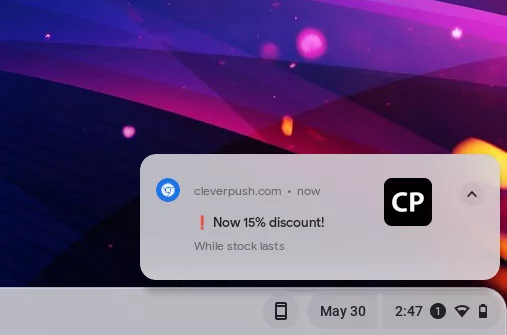
  1. Push Notifications: Push notifications are real-time messages sent directly to users’ devices, even when they are not actively browsing the website. These notifications appear as toast pop-ups or banners and can deliver important updates, personalized offers, or reminders. The key advantage of push notifications is their instant delivery and ability to engage users even when they are not on the website.
  2. Email Notifications: Email notifications have long been a staple of online communication. They are sent to users’ email addresses and are effective in delivering personalized messages, transactional updates, or newsletters. Email notifications allow for more detailed and comprehensive content, making them ideal for conveying in-depth information and maintaining ongoing communication with users.
  3. In-App Notifications: In-app notifications are specifically designed for mobile applications. They appear within the app interface and provide users with relevant information, updates, or interactions. In-app notifications can enhance user engagement, encourage specific actions, and deliver personalized content based on user behavior and preferences.

Each type of notification offers unique benefits and can be strategically employed based on the desired outcome. Push notifications excel at delivering time-sensitive information, email notifications are effective for detailed and personalized communication, and in-app notifications enhance the user experience within mobile applications.

Designing Effective Website Notifications

An example of website toast notifications

To make website notifications impactful and engaging, careful attention should be paid to their design and presentation. Here are some best practices for designing effective website notifications:

  • Visually Appealing Design: A visually appealing notification catches the user’s attention and encourages them to take action. Use eye-catching colors, attractive typography, and appropriate icons or images that align with your brand identity. Ensure that the design elements are consistent with the overall website aesthetics to maintain a cohesive user experience.
  • Clear and Concise Messages: Notifications should deliver the intended message quickly and effectively. Keep the content concise, using short and compelling copy that conveys the purpose of the notification clearly. Users should be able to understand the notification at a glance without having to read lengthy paragraphs.
  • Placement and Timing: Consider where and when the notifications should appear to maximize their impact. Place notifications in a prominent location on the screen where users’ attention is naturally drawn. Avoid obstructing important content or causing frustration. Additionally, time the notifications appropriately to avoid interrupting the user’s flow or appearing too frequently, which can lead to annoyance.
  • Personalization and Relevance: Tailor your notifications to the user’s preferences and behavior whenever possible. Leverage user data and segmentation to deliver personalized and relevant notifications. By understanding their interests and needs, you can increase the likelihood of users engaging with the notifications.

Implementing Website Notifications

When it comes to implementing website notifications, there are various tools and plugins available that can simplify the process and offer a range of customization options. Here are some considerations for implementing website notifications effectively:

  • Notification Plugins and Tools: Depending on your platform, there are dedicated notification plugins and tools that can streamline the integration process. For example, if you are using WordPress, you can explore plugins like “OneSignal” or “PushEngage” that provide comprehensive notification capabilities. If you have an e-commerce website on Shopify, you can leverage built-in notification features or explore Shopify apps like “Firepush” or “PushOwl” for enhanced functionality.
  • Integration with Content Management Systems and E-commerce Platforms: Ensure that the chosen notification system integrates seamlessly with your content management system (CMS) or e-commerce platform. This integration allows you to leverage user data, customer behaviors, and events to trigger relevant and personalized notifications. For example, integrating a notification system with a CMS like WordPress or a platform like Magento can provide a unified solution for managing and sending notifications.
  • Customization Options: Look for notification systems that offer customization options to align with your branding and design requirements. This includes the ability to customize notification templates, colors, icons, and positioning. The more flexibility you have in customizing the appearance and behavior of your notifications, the better you can tailor them to fit your website’s unique style and user experience.
  • Targeting and Segmentation: Effective notification systems allow you to target specific user segments or audience groups with relevant notifications. This targeting can be based on factors such as user preferences, demographics, past behavior, or even geographic location. By delivering notifications that are highly relevant and personalized, you can increase their impact and engagement.

Conversion and Engagement

Website notifications offer a valuable opportunity to drive conversions and increase user engagement. The strategic use of these notifications can encourage users to take desired actions and make the most of their visit to your website. Here are some strategies to optimize conversion and engagement through website notifications:

  • Effective Call-to-Action Buttons: Incorporate clear and compelling call-to-action buttons within your notifications. Make sure the buttons are visually prominent and use action-oriented language to entice users to click. For example, instead of a generic “Learn More” button, use more specific and persuasive phrases like “Get Your Exclusive Discount” or “Start Your Free Trial Today.” Well-designed and attention-grabbing call-to-action buttons can significantly increase click-through rates and conversions.
  • Enticing Offers and Personalization: Use website notifications to deliver exclusive offers, discounts, or personalized recommendations to your users. Tailor these offers based on user preferences, past behavior, or purchase history. Personalized notifications that provide relevant incentives have a higher likelihood of driving engagement and conversions. Experiment with different offers and messaging to determine what resonates best with your audience.
  • Tracking and Analyzing Performance: Implement tracking mechanisms to measure the impact of website notifications on user behavior and website performance. Use analytics tools to monitor metrics such as click-through rates, conversion rates, and revenue generated from notification-triggered actions. By analyzing this data, you can gain insights into the effectiveness of your notification strategies and make informed decisions for optimization.
  • Balancing Frequency and Relevance: Find the right balance between the frequency of notifications and their relevance to your users. Bombarding users with too many notifications can lead to annoyance and opt-outs, while infrequent notifications may result in missed opportunities. Regularly assess the relevance and value of your notifications to ensure they align with user expectations and interests.

Managing User Preferences and Opt-In/Opt-Out Options

Respecting user preferences and providing them with control over their notification experience is crucial for maintaining a positive user relationship. Here are some strategies for effectively managing user preferences and opt-in/opt-out options:

  • Clear and Transparent Notification Settings: Design intuitive and user-friendly notification settings within your website or application. Provide a dedicated section where users can easily manage their preferences, including the types of notifications they wish to receive and the channels through which they prefer to receive them (e.g., email, push notifications). Clearly label each option and provide concise descriptions to help users make informed decisions.
  • Granular Notification Customization: Offer fine-tuned customization options that allow users to personalize their notification preferences based on their interests and needs. For example, provide category-specific subscriptions or the ability to choose the frequency of notifications. Tailoring the notification experience to individual preferences helps to enhance user satisfaction and reduce the likelihood of opt-outs.
  • Opt-In/Opt-Out Mechanisms: Ensure that users explicitly opt-in to receive notifications, rather than automatically subscribing them. Make the opt-in process clear and transparent, clearly stating the benefits of subscribing to notifications and obtaining user consent. Additionally, provide an easy and accessible opt-out mechanism that allows users to unsubscribe from notifications at any time. Include clear instructions on how to manage notification preferences and make the process hassle-free.
  • Compliance with Data Protection Regulations: Adhere to data protection regulations, such as the General Data Protection Regulation (GDPR), when managing user notification preferences. Ensure that you collect and process user data in accordance with applicable laws, and obtain proper consent for storing and using user information for notification purposes. Provide a privacy policy that clearly explains how user data is handled and reassure users that their privacy is protected.
  • Communication and Education: Educate users about the benefits and value of your notifications. Clearly communicate how notifications enhance their experience, provide relevant information, or offer exclusive offers. Regularly engage with users through email or other channels to remind them of the value they receive from your notifications and give them the opportunity to update their preferences if needed.

Optimizing Website Notifications for Mobile Devices

With the ever increasing use of mobile devices, it is essential to optimize website notifications for mobile users. Here are some considerations and strategies for delivering effective and engaging notifications on mobile devices:

  • Responsive Design: Ensure that your notification design is responsive and adapts well to various mobile screen sizes and orientations. Optimize the layout, font sizes, and button sizes to provide a seamless experience across different devices. Test the appearance and functionality of notifications on multiple mobile devices and browsers to ensure consistent performance.
  • Mobile-Friendly Content: Craft notification messages that are concise, clear, and mobile-friendly. Mobile users often have limited attention spans and smaller screens, so it is crucial to deliver your message efficiently. Use simple and engaging language, and consider using visuals, such as icons or images, to make notifications more visually appealing.
  • Timing and Frequency: Be mindful of the timing and frequency of notifications on mobile devices. Respect users’ mobile browsing behaviors and consider their time zones and daily routines. Sending notifications at appropriate times and avoiding excessive frequency can help maintain a positive user experience and prevent users from feeling overwhelmed.
  • Mobile Push Notifications and In-App Messaging: Explore the use of mobile push notifications and in-app messaging to reach mobile users effectively. Push notifications allow you to deliver messages directly to users’ mobile devices, even when they are not actively using your website or app. In-app messaging provides an opportunity to engage users within the app interface itself, delivering timely and contextual information or updates.

Push Those Notifications

Website notifications play a crucial role in enhancing user experience, driving engagement, and increasing conversions. Implementing effective notification strategies can keep your audience informed, engaged, and connected to your website. Remember, a well-designed and well-executed notification system can significantly impact user behavior and contribute to the overall success of your website. However, it is essential to strike a balance between providing valuable notifications and respecting user preferences and privacy.

Regularly monitor and measure the performance of your notifications using analytics and tracking tools, focusing on key metrics such as click-through rates, conversion rates, and user engagement. Use A/B testing and continuous optimization techniques to refine your notification strategies and improve their effectiveness over time. Additionally, gather user feedback to gain insights into their preferences and experiences, allowing you to make data-driven decisions for further improvement.

As you integrate website notifications into your web design and marketing strategies, strive to create a balance between providing valuable information and maintaining a positive user experience. By following the best practices outlined in this article and continuously optimizing your notification system, you can enhance user engagement, drive conversions, and deliver a seamless and personalized user experience on your website.

Creating Effective Calls-to-Action in Web Design

Creating effective calls-to-action is a critical part of web design. A call-to-action (CTA) is a marketing message that encourages website visitors to take a specific action, such as subscribing to a newsletter, downloading a white paper, or making a purchase. A well-designed CTA can help increase conversions, drive sales, and improve user engagement. Here is a quick guide for creating effective CTAs in web design.

The first step to creating an enticing CTA is to make it clear what you want visitors to do. What is the specific action you want them to take? Do you want them to sign up for your newsletter, download a white paper, or make a purchase? Once you know what you want visitors to do, make sure your CTA clearly and concisely states that action. Use action-oriented language that tells users exactly what they will get by clicking on the CTA. For example, instead of “Submit,” use something like “Download My Free Guide.” Be sure to use clear and concise language that is easy to understand.

Your call-to-action should use strong, persuasive language that encourages visitors to take action. Avoid using weak or tentative language, such as “maybe” or “consider.” Instead, use language that is clear, direct, and confident. For example, instead of saying “Subscribe to our newsletter,” you could say “Get our latest news and updates delivered straight to your inbox.”

Make it easy for your visitors to take action. Ensure that the button or link is large enough to be easily clicked, and that it stands out from the rest of the page. You may also want to consider using a contrasting color for your CTA button or link to make sure it stands out. Choose colors that complement your website’s color scheme but are different enough to catch the user’s attention. Use bold or larger fonts to make the CTA more prominent.

Your CTA should be placed in a prominent location on your website where visitors are likely to see it. It should be easy to find and should appear on multiple pages if possible. Users should not have to search for your CTAs. Consider placing your CTA above the fold whenever possible, which means that it is visible without visitors having to scroll down the page.

Use urgency to create a sense of immediacy. Encourage users to act now by using phrases like “Limited Time Offer” or “Act Now.” Strong action words like “click,” “buy,” and “sign up” are more likely to get people to take action than vague terms like “learn more” or “explore.”

To write the most effective copy for your CTAs, get to know your target audience. Who are you trying to reach with your CTA? How can your product or service help them? Once you understand your target audience, you can tailor your message to appeal to their specific interests and needs.

Finally, test and optimize your CTAs regularly. There’s no one-size-fits-all approach to creating effective CTAs. Experiment with different language, colors, and placement variations to see what works best for your audience. Analyze your data to determine which CTAs are driving the most conversions and adjust your strategy accordingly.

Hopefully this guide has helped you use CTAs to increase your conversion rate and close more sales. By following these tips, you can create effective CTAs that encourage users to take action and improve your website’s overall performance. Ultimately, this should help you achieve your marketing goals.

Color Psychology and its Impact on Web Design

Color is a fundamental aspect of web design that can have a significant impact on user experience. Color psychology is the study of how color affects human behavior, mood, and emotion. When used effectively, color can help convey a message, evoke emotions, and guide users through a website.

Color psychology suggests that different colors can evoke different emotions in people. For example, red can symbolize passion, energy, and excitement, while blue is often associated with trust, calmness, and security. By using colors strategically, web designers can create a specific mood or emotion within their website visitors.

One important consideration is to choose colors that are appropriate for the brand and the target audience. Bright and bold colors may work well for a children’s website, but may not be appropriate for a financial institution. Neutral and muted colors may be better suited for a professional website.

Another factor to consider is color contrast. High contrast between background and foreground colors can make it easier for users to read text and navigate the site. It’s important to also consider color accessibility and make sure that the site is accessible to users with visual impairments. Tools like the WCAG color contrast checker can help ensure that color contrast meets accessibility standards.

In addition, it’s also important to consider the overall visual hierarchy of the website. Colors can be used to draw attention to important elements, such as calls to action or navigation menus. Using color consistently throughout the website can also help create a cohesive and memorable brand identity.

Color theory is the study of how colors interact with each other and the human eye. It involves understanding the color wheel, color harmony, and color contrast. By applying color theory principles in web design, designers can create harmonious color palettes that communicate the intended emotions and messages to the users.

Here are some examples of how color can be used in web design:

  • Red: Red is a powerful color that can be used to create a sense of urgency or excitement. It’s often used on websites that sell products or services that people need right away, such as restaurant and delivery websites or emergency services websites.
  • Orange: Orange is a warm and inviting color that can be used to create a sense of excitement or happiness. It’s often used on websites that sell products or services that people want to enjoy, such as recipe or travel websites.
  • Yellow: Yellow is a bright and cheerful color that can be used to grab attention or create a sense of optimism. It’s often used on websites that have products or services that people want to buy, such as retail websites or online stores.
  • Green: Green is a calming and relaxing color that can be used to create a sense of peace or relaxation. It’s popular on environmental and outdoors sites.
  • Blue: Blue is a cool and calming color that can be used to create a sense of trust or reliability. It’s commonly used on websites where people need to feel safe and secure, such as banking websites or government websites.

Color psychology is a powerful tool that can help web designers create an effective and engaging user experience. Remember, too much color can be overwhelming and distracting. It’s important to use color sparingly and to choose colors that complement each other. By choosing appropriate colors, considering contrast and accessibility, and using color strategically, designers can enhance the user experience and create a memorable brand identity.