
Your customers are probably reading this on a phone, maybe in a parking lot on Middle Road or waiting in line at a coffee shop in downtown Davenport. If your website makes them pinch, zoom, and squint, they’ll tap the back button and call someone else. Responsive web design makes sure that doesn’t happen.
Every website Photricity Web Design builds is responsive by default. One site and one URL adapt smoothly to phones, tablets, laptops, and the giant monitor your accountant swears by.
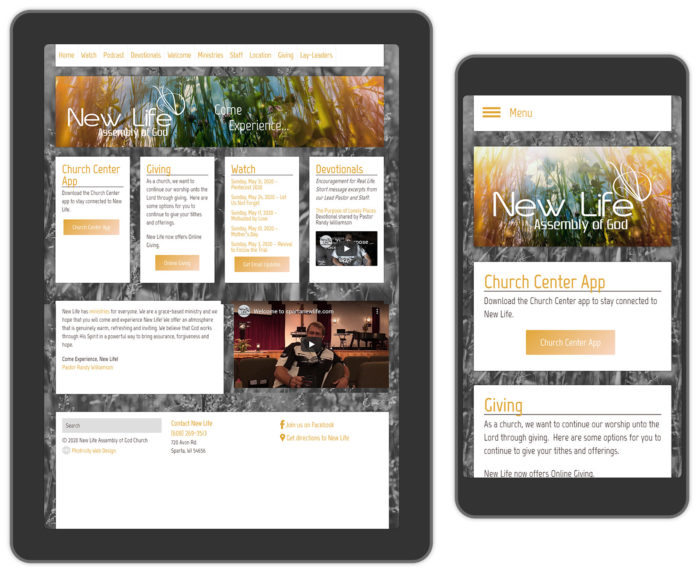
What Responsive Web Design Actually Means
A responsive layout uses fluid grids, flexible images, and CSS media queries so content rearranges itself to fit whatever screen it’s on. Columns stack on small screens, images resize without getting blurry or bloated, and text stays readable with responsive typography that scales with the viewport. Modern CSS tools like CSS Grid make these layouts sturdier and lighter than the old hacks ever were.
Designed Mobile-First, Not Shrunk to Fit
Plenty of sites are designed for desktop and then squeezed onto phones as an afterthought. We go the other way: mobile-first design starts with the smallest screen and the most important content, then adds enhancements as space allows. The result is a focused experience where your phone number, directions, and quote button are always one thumb away.
Built for Thumbs
Touch screens have their own rules. Buttons need room to be tapped accurately, menus need to open without a fight, and forms shouldn’t require surgical precision. We follow best practices for touch-friendly design and build responsive navigation that collapses neatly on small screens without hiding what matters.
Why Mobile-Friendly Matters for Search
Google uses the mobile version of your site for indexing and ranking, so a clunky mobile experience can hold back your whole website. Responsive design keeps one URL for every device, which keeps your links and authority in one place and supports your broader SEO strategy. Pair it with responsive images and a fast, lightweight build, and mobile visitors get a site that loads quickly even on spotty cellular data.
Tested on Real Devices
Before launch, we test on a range of phones, tablets, and browsers to catch quirks emulators miss. Thorough browser testing plus attention to accessibility and usability means your site works for everyone, including visitors using keyboards or screen readers.
Real Results on Real Screens
Take a look at the Photricity portfolio on your phone, then on your laptop. Each project is built to keep its personality at every size, from churches and nonprofits to contractors and health practices. The layout changes and the brand stays the same, and visitors find what they came for without hunting for it.
Frequently Asked Questions
Can you make my existing website responsive?
Sometimes. If the current site is built on an outdated layout, a fresh custom build is often faster and cheaper in the long run. We’ll give you an honest recommendation.
Do I need a separate mobile site or app?
No. A responsive website serves every device from one address, so there’s nothing extra to maintain.
Want a site that looks sharp on every screen in the Quad Cities and beyond? Let’s talk about your project.